You’ve worked hard to maintain your recovery, but then you use a substance again. You may immediately wonder, “Did I just relapse?”
That moment can bring confusion, guilt, or fear about losing progress. But one return to substance use does not necessarily mean you have returned to old patterns.
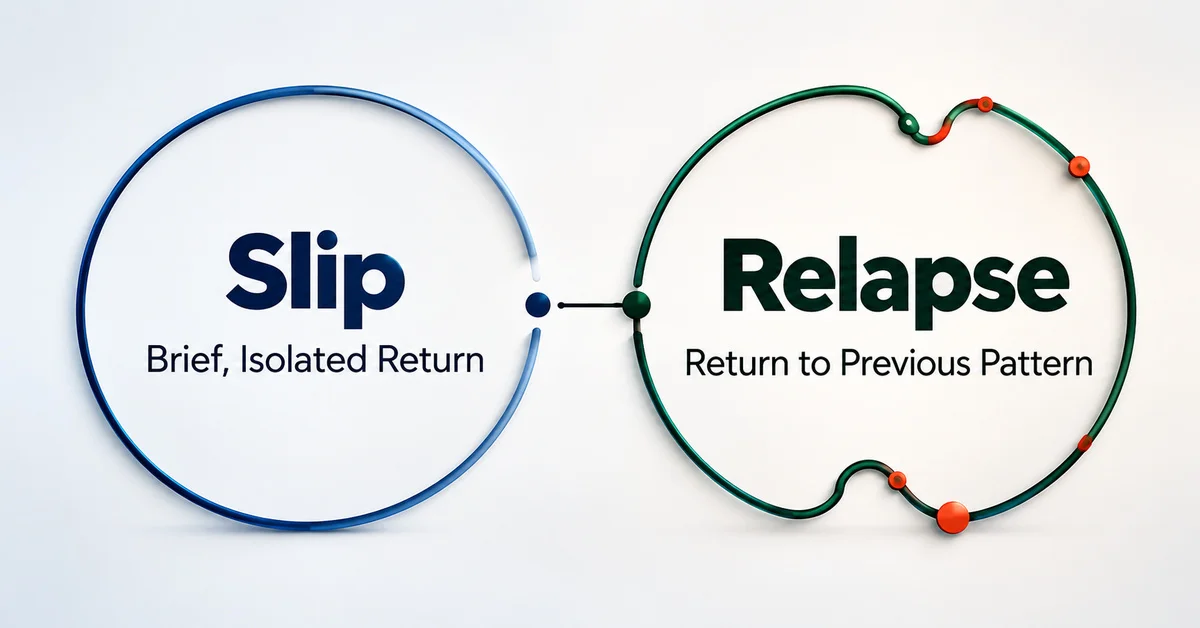
A slip is usually a brief return to substance use, while relapse involves repeated or ongoing use. The terms slip, lapse, and relapse can also have different meanings across recovery settings.
This guide explains slip vs. relapse, warning signs, and what to do next. It also covers relapse prevention and recovery support available in New Jersey.
What Is a Slip?
A slip is commonly used for a brief, isolated return to substance use. Some recovery resources also use the terms lapse or slip-up for similar situations.
The terms slip and relapse are sometimes used interchangeably across recovery settings. Their meaning can differ between professionals, programs, and recovery groups.
For example, one professional may call one drink a slip, while another may call it a lapse. In either case, the person can recognize the trigger, stop using, and reconnect with their recovery plan.
What Is a Relapse?
A relapse occurs when substance use returns after a period of recovery or sobriety. Relapse often involves repeated use, increasing frequency, or a return to previous patterns.
A relapse isn’t proof that recovery has failed. A relapse may show that the current recovery plan needs closer review. The pattern matters more than the label alone. Continued drug and alcohol use may require support from addiction professionals.
Slip vs. Relapse: Key Differences
The difference between a slip and a relapse mainly involves the pattern and response. These terms should not be treated as rigid clinical categories.
| Comparison point | Slip | Relapse |
| Pattern of use | Often brief or isolated | Relapse often involves repeated or escalating use |
| Impact on recovery | Can disrupt sobriety temporarily | Can significantly disrupt the recovery process |
| Recovery response | Prompt return to the recovery plan | May require a broader plan review |
| Warning signs | Trigger-related use or renewed cravings | Continued use, cravings, withdrawal from support |
| Support needs | Support may help address the trigger | Additional recovery or professional support may help |
This comparison between slip and relapse is a practical framework, not a formal diagnostic system. A person’s circumstances, substance use history, and support needs all matter.
Warning Signs A Slip May Be Turning Into A Relapse
Warning signs can appear before substance use becomes ongoing. Recognizing these changes early may help someone seek support sooner.
Changes In Thoughts And Emotions
- Thinking more often about using alcohol or drugs.
- Experiencing stronger or more frequent cravings.
- Rationalizing continued use after a slip.
Changes In Behavior
- Returning to people or places linked with past use.
- Hiding substance use from others.
- Returning to previous addictive behaviors.
Changes In Recovery Routines
- Avoiding recovery meetings or supportive relationships.
- Stopping healthy routines that support recovery.
Stress, familiar settings, or past-use reminders can trigger cravings. Noticing these changes early may help prevent continued substance use.
Steps to Take After a Slip
After a slip, stop the substance use and reconnect with your recovery support. Acting early can help you understand what contributed to the event.
Start by reviewing what happened without turning it into self-punishment. Consider the situation, emotions, people, places, and thoughts that appeared before the slip.
Then:
- Tell a trusted support person what happened.
- Identify the immediate trigger or situation.
- Review your recovery plan.
- Strengthen your coping strategies.
- Return to supportive recovery activities.
- Consider professional guidance if needed.
Avoid assuming you must return to day one. Recovery is about learning from setbacks and using that information to strengthen your path to recovery.
Steps to Take After a Relapse
After a relapse, reconnect with professional and peer support as soon as possible. Continued substance use may indicate that your current recovery plan needs adjustment.
Start by being honest about the pattern and frequency of use. A qualified professional can help determine whether additional addiction treatment or other services may be appropriate.
You may need to review:
- Current triggers and cravings.
- Changes in your daily routine.
- Your existing recovery plan.
- Support relationships and accountability.
- Whether your current services remain suitable.
For alcohol-related recovery, treatment providers can adjust treatment plans after relapse.
Relapse Prevention Strategies That Support Recovery
Relapse prevention works best when it addresses personal triggers and early warning signs. A useful plan should identify what increases the likelihood of substance use and what actions can interrupt that pattern.
Practical strategies include:
- Identify triggers: Track situations, emotions, and people linked with cravings.
- Manage cravings: Prepare specific coping responses before cravings become intense.
- Build support: Stay connected with trusted people who understand recovery.
- Use recovery groups: Regular meetings can provide structure and peer accountability.
- Create daily structure: Plan activities that support sobriety and reduce high-risk situations.
- Review warning signs: Know which changes usually appear before substance use.
- Update your recovery plan: Adjust strategies when circumstances change.
- Use professional support: Counseling or addiction treatment may provide additional tools.
Peer support can help people stay connected during recovery. Regular support can also provide accountability and help manage challenges.
When Additional Recovery Support May Be Needed
Additional support may be appropriate when substance use becomes repeated, difficult to control, or increasingly disruptive. Persistent cravings and withdrawal from recovery support also deserve attention.
Consider reaching out when you notice:
- Repeated slips within a short period.
- Increasing substance use after a slip.
- Difficulty managing cravings alone.
- Withdrawal from recovery groups.
- Problems affecting work, relationships, or daily responsibilities.
- A return to addiction patterns of drug or alcohol use.
People with substance use disorders may need different levels of recovery support over time. A professional can help review current needs and identify appropriate services. Support may include counseling, treatment, peer groups, or other recovery services.
Recovery Support And Sober Living In New Jersey
New Jersey residents can access recovery support through peer groups, community programs, treatment providers, and sober living environments. The right option depends on the person’s current needs and recovery goals.
HealingUS provides relapse prevention, peer support, recovery coaching, and sober living resources in New Jersey. Its communities operate in Monmouth and Ocean County and focus on accountability and sober community connections.
People seeking meetings can also explore HealingUS recovery support groups. SAMHSA also provides national recovery resources and information about peer support services.
For people needing help identifying treatment resources, HealingUS also maintains New Jersey treatment resources. This can help connect individuals with appropriate services when peer recovery support alone may not meet their needs.
Finding The Right Support After A Slip Or Relapse
The right support depends on what is happening now, not only on the label used. A brief slip may call for stronger accountability, while ongoing use may require broader professional support.
Consider these questions before choosing your next step:
- Is substance use continuing? Consider professional evaluation and treatment resources.
- Are cravings increasing? Add structured coping and peer support.
- Are recovery routines breaking down? Rebuild accountability and daily structure.
- Is your living environment risky? Consider a supportive sober living setting.
- Do you need community connection? Explore recovery meetings and peer programs.
This approach keeps the focus on practical needs. It also avoids treating “slip” or “relapse” as labels that define someone’s recovery.
Take The Next Step With HealingUS
HealingUS offers recovery support for people working toward long-term sobriety in New Jersey. Our relapse prevention program includes accountability, peer case management, recovery activities, and sober community support.
HealingUS also offers structured sober living options in Monmouth and Ocean County. These homes provide peer support, accountability, recovery activities, and structured living environments.
Learn more about our sober living homes and relapse prevention program to understand how HealingUS supports people in recovery.
Frequently Asked Questions
Is a slip the same as a relapse?
No. A slip is usually a brief return to substance use, while relapse involves repeated or ongoing use. The terms can vary across recovery settings.
Can a slip turn into a relapse?
Yes. A slip can become a relapse when substance use continues, or old patterns return. Stronger cravings may also make continued use more likely.
Does a slip mean recovery has failed?
No. A slip does not erase the progress made during recovery. It can also help identify triggers that need more attention.
Is a lapse different from a slip?
Usually, the terms have similar meanings and describe a brief return to substance use. However, recovery programs and professionals may use the terms differently.
What should you do after a slip in recovery?
Stop using, identify what triggered the slip, and reconnect with your support system. Reviewing your recovery plan can also help you get back on track.
What are the warning signs of relapse?
Warning signs include repeated substance use, stronger cravings, isolation, and avoiding recovery support. Returning to old routines can also signal increased relapse risk.